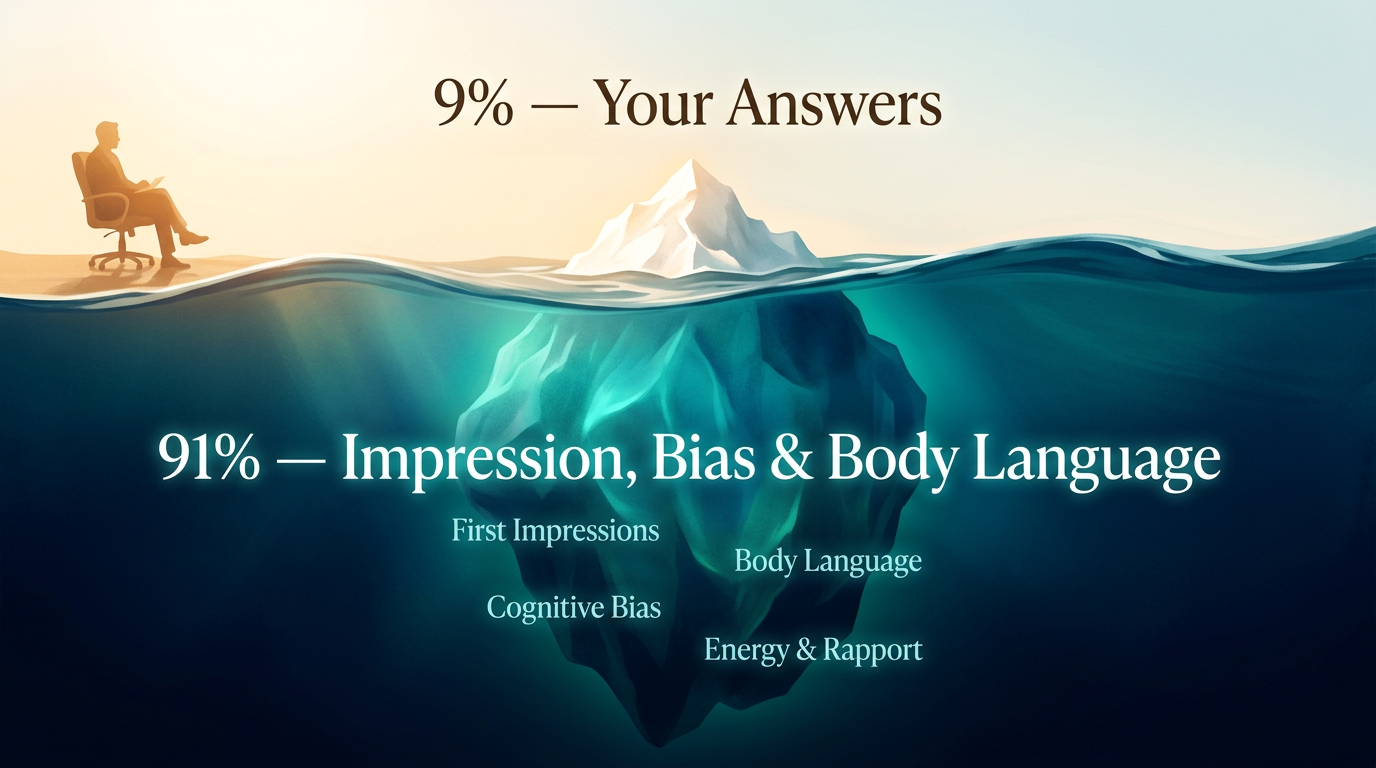
You know the feeling. The question was simple. You knew the answer. And somehow, ninety seconds later, you’re still talking — circling, qualifying, adding “sort of” and “if that makes sense,” watching the interviewer’s face for a sign you’ve said enough.
You walk out and decide something quietly cruel about yourself: I’m just a rambler. That’s who I am.
It isn’t. Rambling isn’t a personality trait. It’s a predictable thing a brain does under specific conditions — and once you understand the conditions, you stop taking it as a verdict on who you are.
If any of these look familiar, you’re not imagining it:
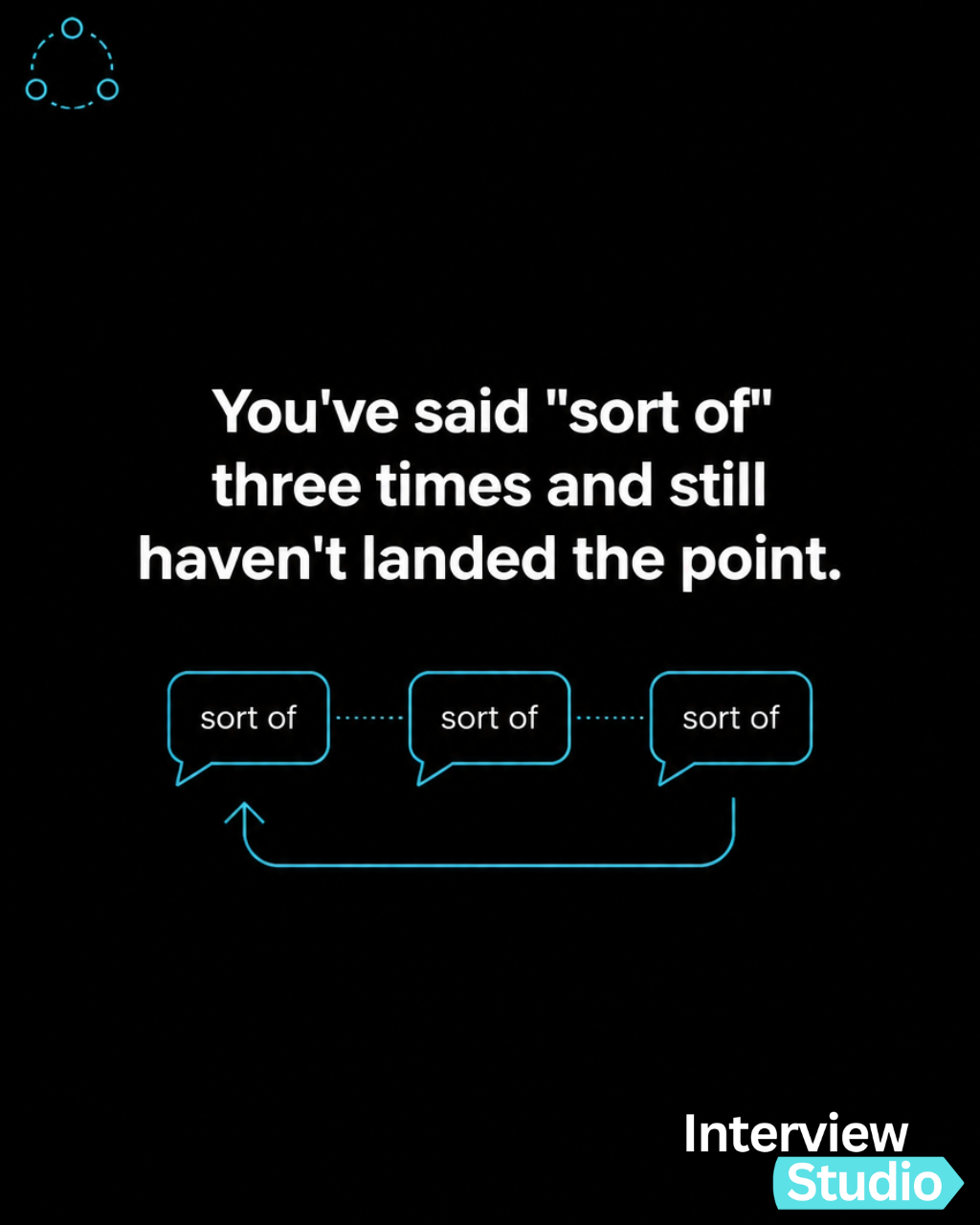
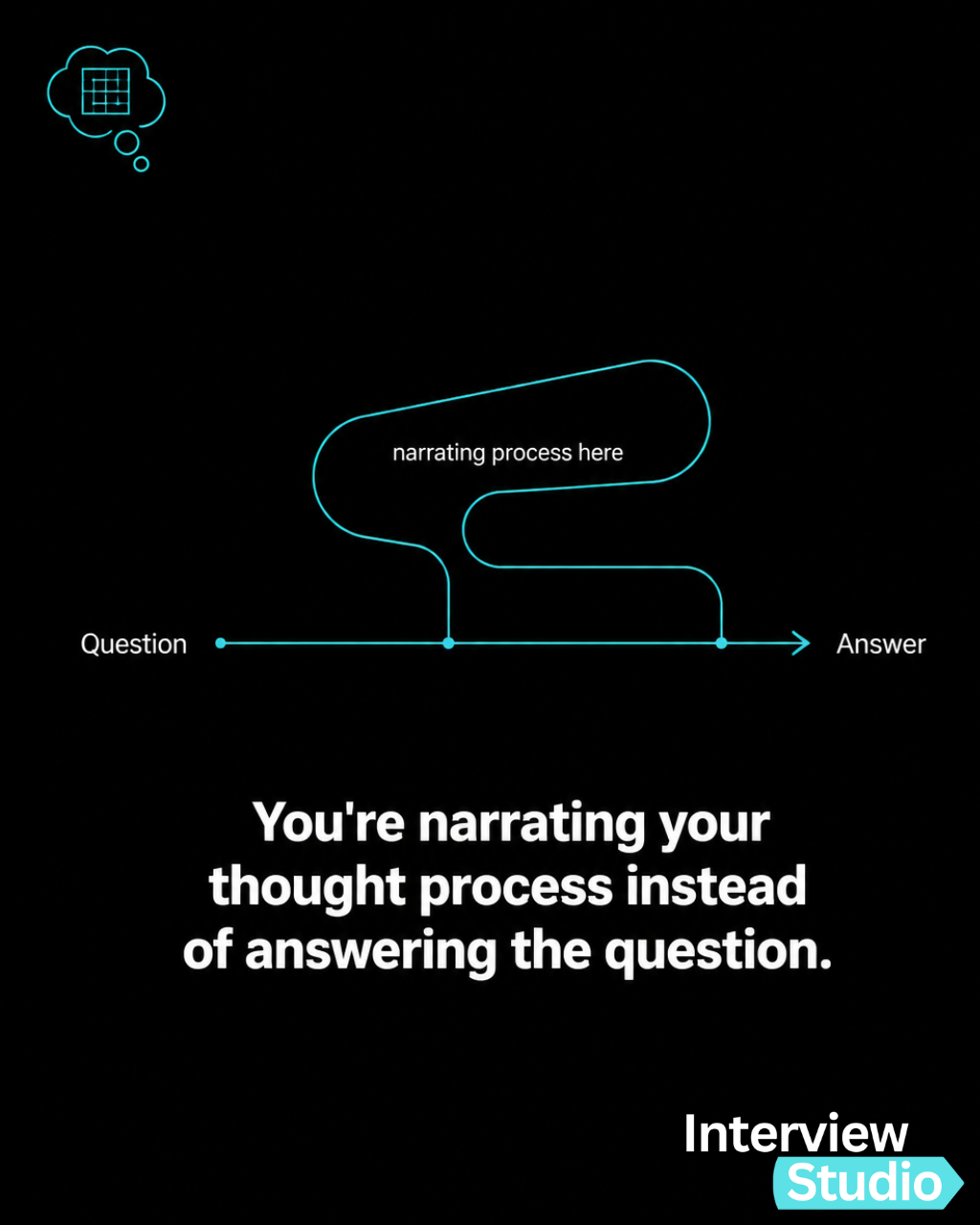
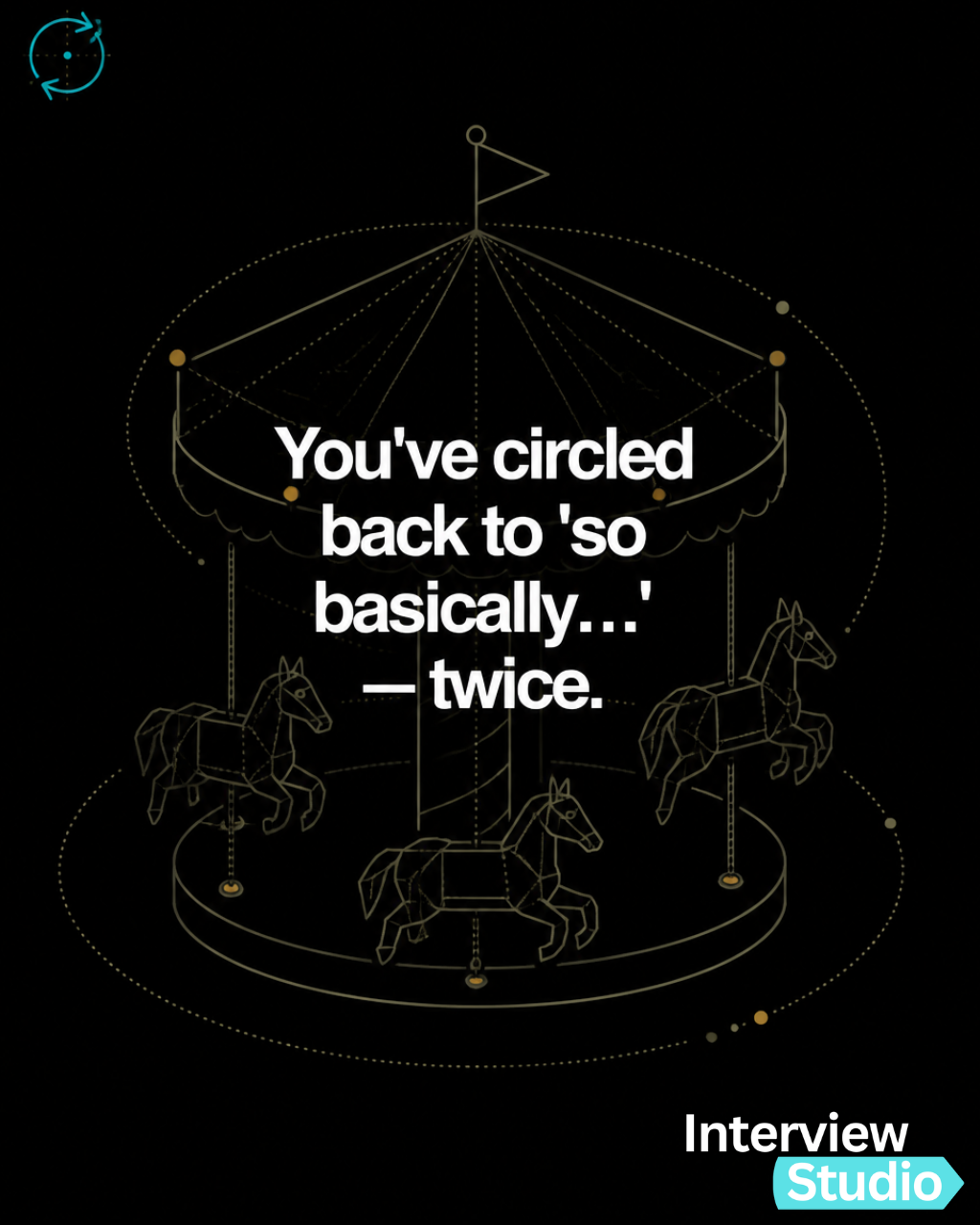

What Rambling Actually Is
Rambling is what happens when you’re composing an answer and delivering it at the same time, live, with no map.
When you haven’t rehearsed something out loud, you don’t have a route through it. So you start talking and figure out where you’re going as you go — which means every sentence spawns three possible next sentences, and under pressure you take all of them. You add a caveat. Then a caveat to the caveat. You remember a detail and reverse to include it. You can feel it getting long, so you try to wrap up, and the attempt to wrap up becomes its own new tangent.
None of that is a character flaw. It’s just what improvising under stress looks like. You’re not disorganized as a person — you’re organizing in real time, in front of an audience, which is one of the hardest things a brain can be asked to do.
Why Pressure Makes It Worse
Add nerves and the whole thing tightens.
Under stress, your working memory shrinks — the mental space where you hold “what I’m saying now” and “where I’m heading” at the same time. When that space narrows, you lose the thread mid-sentence. And losing the thread feels like failure, so you talk more to cover the gap, hoping the point will reassemble itself if you keep going.
It usually doesn’t. More words rarely rescue a lost thread. But in the moment, silence feels more dangerous than over-talking, so you keep filling the air.
Nerves shrink your capacity, the shrink makes you lose the point, losing the point makes you nervous — and around it goes.
The interviewer, meanwhile, checked out somewhere back around the second caveat.
Why Reading More Answers Won’t Fix It
Here’s the trap most people fall into next: they decide the problem is preparation, and they go read more.
More sample answers. More “how to structure your response.” More bullet points to memorize. And it does nothing, because rambling was never a knowledge gap. You didn’t ramble because you didn’t know the answer — you knew it fine. You rambled because you’d never actually said it out loud, under pressure, before the moment that counted.
Knowing an answer and delivering an answer are different skills. One lives quietly in your head, where it’s always clean and never stumbles. The other has to survive nerves, a real listener, and the absence of a rewind button. You can’t build the second one by doing more of the first. Reading is input. Delivery is a motor skill.
It’s the same reason you can’t read your way to playing an instrument, or talk your way through a first driving lesson. Some things only get smoother with reps.
The Fix Is Reps, Not More Prep
If rambling is what a brain does with no rehearsal, the fix is rehearsal — actual, out-loud reps.
Not reading your answers. Not thinking them through on the drive over. Saying them, out loud, as if someone’s listening, enough times that you stop discovering the route mid-answer and start knowing it. The goal isn’t a memorized script — scripts shatter the moment a question is phrased unexpectedly. The goal is fluency: having said something in this shape enough times that you can land it even when the words vary.
The first time you say an answer out loud, it wanders — that’s expected, not a bad sign.
The third time, it’s tighter. You’re starting to know the shape of the answer, not just the facts inside it.
By the fifth, you’ve found the version that actually lands — and, more importantly, you’ve found the exit. You know how the answer ends, which means you stop talking on purpose instead of trailing off because you ran out of road.
That only happens with reps. And the reps have to be out loud, because out loud is where the rambling actually lives. You will never catch it silently in your head, because in your head it’s always clean.
Rehearse It Before It’s Real
This is exactly why practicing out loud, somewhere it doesn’t count, changes everything — and it’s the whole reason InterviewStudio exists. Not another list of answers to read. A place to actually rehearse: to say your answers out loud, hear yourself wander, find the exit, and tighten it — before you’re doing it live in the room that matters.
If you’ve got an interview coming up, one honest rehearsal out loud will teach you more about your own rambling than ten more articles ever could. You can try a full simulation free, no signup — just start talking, and listen to what your answers actually do when they leave your head.
You’re not a rambler. You’re just a person who hasn’t rehearsed yet. Those are very different things — and only one of them is fixable.
Hear What Your Answers Actually Do
Start a free AI mock interview and practice with a real-time video interviewer that adapts to your resume and target role — so you find your exit before the room that matters.
Start Your Free Mock Interview →Key Takeaways
- Rambling isn’t a personality trait. It’s what happens when you compose and deliver an answer at the same time, live, with no rehearsed route through it.
- Pressure makes it worse, not just more visible. Stress shrinks working memory, you lose the thread, and talking more to cover the gap rarely brings it back.
- It’s a skills gap, not a knowledge gap. You don’t ramble because you don’t know the answer — you ramble because you’ve never said it out loud under pressure before.
- Reading more answers won’t fix it. Delivery is a motor skill, not information — it only improves with reps, not more input.
- Rehearse out loud, repeatedly. The first rep wanders, the third tightens, and by the fifth you’ve found the exit — the point where you stop on purpose instead of trailing off.